

Glastonbury Abbey

Entry posted by Animedragon in General
4,033 views
The story of Glastonbury Abbey story starts somewhere around 670AD when a Saxon church was built on the site, this was later replaced with a much larger Norman church, which was destroyed in a fire in 1184.
The ruins we see today are all that is left of the Great Church which replaced the Norman church and work on it was started in 1189. You only have to look at what remains to get some idea of how huge and impressive it must have looked when it was finished.
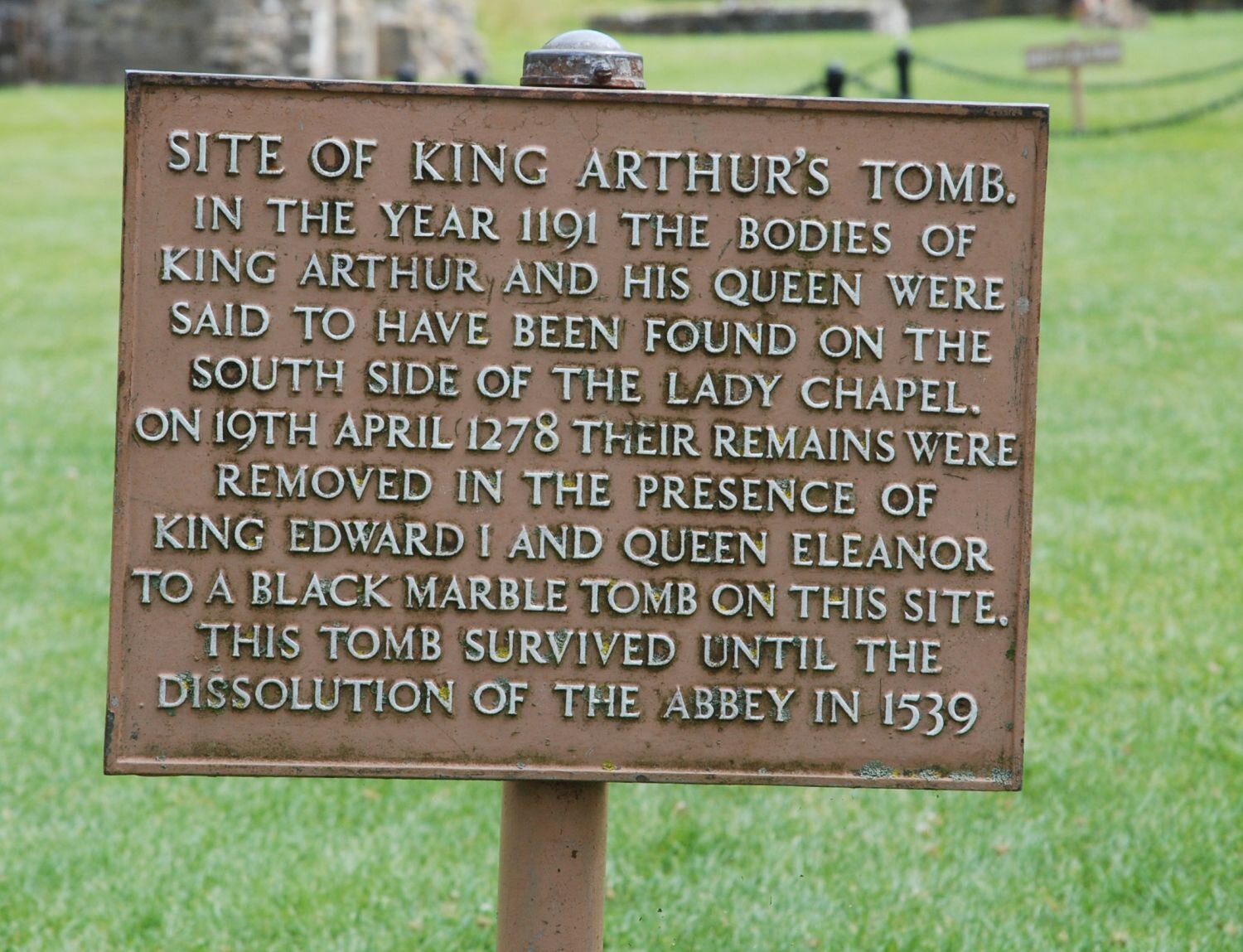
In 1191 while excavating in the abbey cemetery the monks found, buried at a great depth, a wooden coffin which reportedly carried an inscription claiming it contained the bodies of King Arthur and Queen Guinevere. The bones of King Arthur were re buried in the abbey in 1278 in a black marble tomb at a service attended by King Edward I. Some historians claim that the bones had nothing to do with King Arthur and that it was all just a publicity stunt to gain the abbey more funds for its rebuilding programme, but who now knows what the truth is. When you stand in front of the sign and look at the place where the tomb stood it's not easy to dismiss it and walk away, the legend of King Arthur is as strong today as it was then.
By the 14th Century the Abbey was one of the richest and most powerful monasteries in England and controlled huge tracts of the surrounding land. But things didn't go on forever, and the end came in 1539 as a result of the Dissolution of the Monasteries under King Henry VIII.
The Abbey today is a grade 1 listed building and scheduled ancient monument.
The view from the choir towards the Lady Chapel. The two huge pillars are all that is left of the supports of the tower and transepts. The railed off area is the site of the High Altar. (the sky colour was create with a filter)

A view into the Lady Chapel. There was originally a floor going the full length of the chapel, the bridge walkway is a modern addition.

Part of the outside wall of the Lady Chapel.

This is, or was, the Abbot's kitchen and is the only complete building of the Abbey that remains.

The sign marking the place where the tomb of King Arthur was sited.
Thank you for reading this blog entry, I hope you found it interesting.
-
 1
1
-
 1
1
-
 1
1
-
 2
2
-
 1
1
12 Comments
Recommended Comments