
Life without a brain & other jellyfish things

Did you know jellyfish don't have a brain? They also don't have hearts or a central nervous system. They do however have a collective of nerves forming a nerve net. This allows them to sense and respond to stimuli such as touch, light, and temperature. Despite this, they can still perform complex behaviors, including swimming, feeding, and even learning. These are just a few facts I'm going to go over about jellyfish in this blog entry. Let's start off with a few basic facts about jellyfish.

- They are about 95% water.
- They have no brain, heart, or bones.
- Their tentacles are covered in tiny stinging cells called nematocysts. These cells fire microscopic harpoons that inject venom.
- They mostly drift with ocean currents rather than actively swimming long distances.
- Jellyfish have existed for over 500 million years, making them older than dinosaurs and some species have remained relatively unchanged for millions of years.
- The box jellyfish is one of the most venomous marine animals in the world.
- The species known as the “immortal jellyfish”, Turritopsis dohrnii, can revert back to its juvenile form after reaching adulthood, potentially repeating its life cycle.
__________________________________________________________________________________________________________________________________________________________________________________________________________________
Now I'll go ahead and do a myth vs. fact jellyfish addition too.
 Myth #1: All jellyfish are deadly.
 Fact: Most jellyfish stings are painful but not life-threatening to humans. However, species like the box jellyfish can be extremely venomous.
Myth #2: If it’s dead, it can’t sting you.
Fact: Even dead jellyfish can still sting. Their stinging cells (nematocysts) can fire after the jellyfish has washed ashore.
Myth #3: Jellyfish are fish.
Fact: Despite the name, jellyfish are not fish. They’re in the phylum Cnidaria, making them more closely related to corals and sea anemones.
Myth #4: Jellyfish don’t have eyes.
Fact: Some species do! Certain box jellyfish species have surprisingly complex eyes that can detect light and shapes.
__________________________________________________________________________________________________________________________________________________________________________________________________________________
Box Jellyfish
This section will be dedicated to the box jellyfish, the most deadly of the jellyfish. Currently we know of around 51 species of the box jellyfish which are grouped into 2 orders and 8 families. Stings from some species, including Chironex fleckeri, Carukia barnesi, Malo kingi, and a few others, are extremely painful and often fatal to humans. This venom is delivered by contact with it's tentacles.
The most venomous box jellyfish is the Chironex fleckeri, commonly known as the Australian box jellyfish or sea wasp. It has extremely potent venom that attacks the heart, nervous system, and skin cells. and the more severe stings can cause intense pain, cardiac complications, and in rare cases, can be fatal if not treated quickly. It’s primarily found in the coastal waters of northern Australia and parts of Southeast Asia.
__________________________________________________________________________________________________________________________________________________________________________________________________________________
The Immortal Jellyfish
The immortal jellyfish is the species Turritopsis dohrnii and it’s famous for its unusual ability to essentially “reset” its life cycle. It can revert from its adult stage back to its juvenile polyp stage and it can do this process multiple times. This process is called transdifferentiation, where specialized cells transform into different types of cells. When stressed, injured, or nearing the end of its life, it can transform its adult cells back into immature cells and return to its earlier polyp stage. From there, it can grow into a new adult again.
Is it truly "immortal"? No, not really. It can still die from things like predators, disease, or environmental changes too.
These jellyfish are actually super tiny, about the size of your pinky nail.
Scientists are currently studying them to learn more about aging, cellular regeneration, and stem cell processes.
__________________________________________________________________________________________________________________________________________________________________________________________________________________
Moon Jelly
This is the most common species of jellies, and likely one you've seen. This species is hardy and super easy to care for, and often found in aquariums. It's found in temperate and tropical oceans worldwide and most common in bays, estuaries, harbors, and coastal waters.
- Usually about 10–16 inches (25–40 cm) across.
- Has relatively mild venom, generally harmless to humans.
- Feeds mostly on plankton and small marine organisms.
- Moves by gently pulsing its bell, drifting with currents.
Good news, you can have these as pets. Here's a few key things to know or have if you're going to do that:
You're going to need a kreisel tank and they cannot live in regular tanks and thrive. These types of tanks will allow them to float suspended in the water, prevents them from getting stuck in corners, and creates a gentle current for them that they need to survive. Moon jellies are very soft-bodied and they can tear easily if they touch any type of hard surface or filters.
They are very sensitive to water quality. Because of this you'll need to keep the tank temperature around 60–70F (15–21C). Of course, it will have to be a salt water tank with strong filtration and keep the water clean at all times. Clean water is critical because jellyfish have no immune system like vertebrates.
For food, they'll eat mostly baby brine shrimp or specialized jellyfish food blends you can order online and they'll need to be fed 1-2 times daily. Because they lack complex digestive systems, uneaten food must be cleaned out quickly to prevent water quality issues.
Keep in mind, even though they look simple enough to care for, they are not beginner pets and require a lot of care and work.
__________________________________________________________________________________________________________________________________________________________________________________________________________________
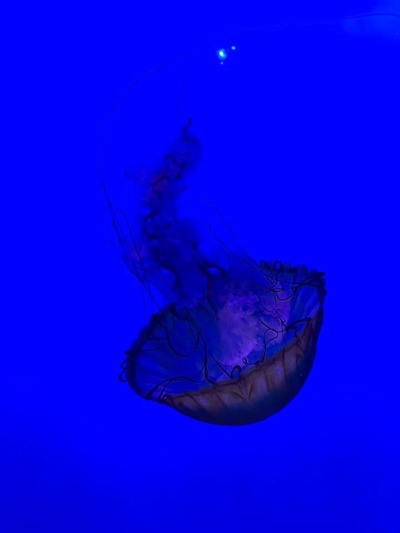
To end, I'll leave you with a few pictures I took of jellyfish at the Ripley's Aquarium.


-
 6
6
-
 3
3
-
 2
2
-
 1
1
-
 1
1
-
 2
2
32 Comments
Recommended Comments